
Car Magazine
Automotive Brake Systems: A Comprehensive Overview by a Mechanical Expert
Jul
Introduction:
Automotive brake systems play a critical role in vehicle safety and control. As an expert in mechanical engineering with extensive knowledge of automotive technology, I will delve into the intricate workings of modern brake systems, their components, and the principles behind their operation. Brakes are a fundamental aspect of vehicle design, enabling drivers to decelerate, stop, and maintain control during various driving conditions. In this article, I will explore the different types of brakes, their components, the principles of friction and heat dissipation, and the advancements in brake technology that have significantly enhanced vehicle safety and performance.
-
Types of Brake Systems:
Automotive brake systems can be broadly categorized into two main types: disc brakes and drum brakes.
a. Disc Brakes:
Disc brakes are the most common type of brake system used in modern vehicles. They consist of a brake disc (rotor) mounted on the wheel hub and a caliper that houses brake pads. When the brake pedal is pressed, hydraulic pressure forces the brake pads against the rotating disc, generating friction and slowing down the vehicle.
b. Drum Brakes:
Although less prevalent in modern vehicles, drum brakes are still used in some applications, particularly in the rear wheels of certain cars and trucks. Drum brakes consist of a hollow drum that rotates with the wheel and brake shoes that press against the inner surface of the drum when the brakes are applied.
-
Brake Components and Their Functions:
a. Brake Pads:
Brake pads are critical components in disc brake systems. They are typically made of friction material (often semi-metallic, organic, or ceramic) that interacts with the brake disc when pressure is applied. The friction generated between the brake pad and disc converts kinetic energy into heat, resulting in deceleration.
b. Brake Calipers:
The brake caliper houses the brake pads and applies pressure to them when the brake pedal is pressed. Calipers can be either fixed or floating, with the former mounted rigidly to the suspension and the latter allowed to move slightly to accommodate disc runout.
c. Brake Discs (Rotors):
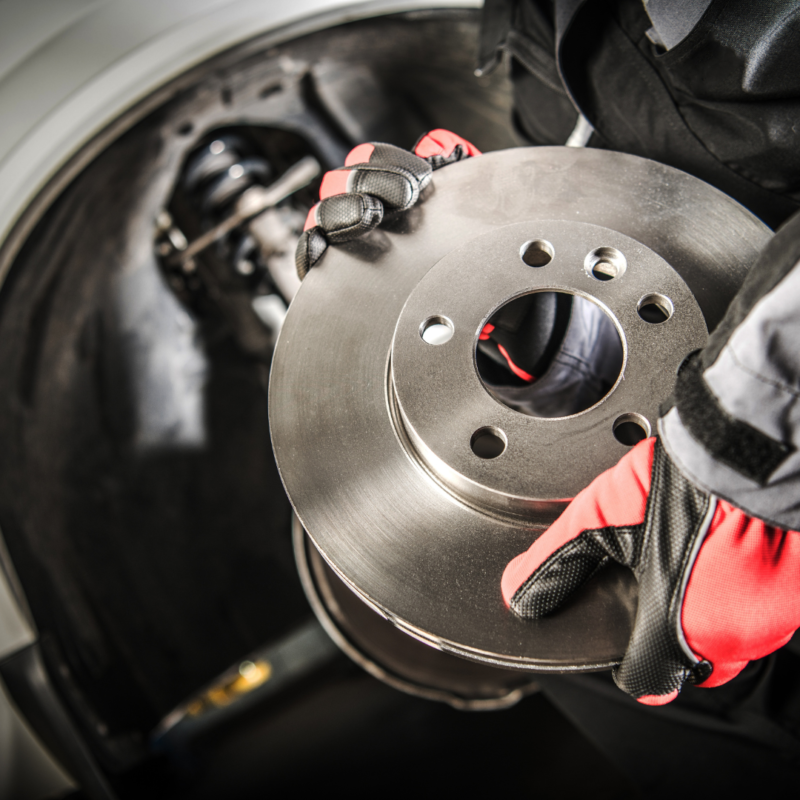
Brake discs are circular metal components mounted on the wheel hub. When the brake pads press against the disc, the resulting friction slows down the vehicle. Brake discs are usually made of cast iron, although some high-performance applications use carbon-ceramic composite discs for enhanced performance and reduced weight.
d. Drum Brake Shoes:
In drum brake systems, the brake shoes are the components that press against the inner surface of the brake drum to create friction and decelerate the vehicle. They are typically made of a similar friction material as brake pads.
e. Brake Lines and Hydraulic System:
Brake lines carry brake fluid from the master cylinder to the brake calipers or wheel cylinders in drum brakes. The hydraulic system allows the force applied to the brake pedal to be transmitted to the brake components, ensuring precise and consistent braking.
-
Friction and Heat Dissipation:
The fundamental principle behind braking is converting kinetic energy into heat energy through friction. When the brake pads or shoes press against the rotating disc or drum, friction is generated. This friction transforms the vehicle’s kinetic energy into heat, causing the brake components to heat up.
Efficient heat dissipation is crucial to ensure the brake system’s performance and prevent brake fade, which occurs when prolonged braking causes a reduction in braking efficiency due to excessive heat build-up. To address this, modern brake systems use vented discs and heat-resistant materials to dissipate heat more effectively.
-
Advancements in Brake Technology:
Over the years, significant advancements have been made in brake technology to improve braking performance, safety, and durability. Some notable advancements include:
a. Anti-lock Braking System (ABS):
ABS is a safety feature that prevents wheel lock-up during heavy braking. It rapidly modulates brake pressure to allow the wheels to maintain traction with the road, reducing the risk of skidding and maintaining steering control.
b. Electronic Brakeforce Distribution (EBD):
EBD is a system that automatically adjusts brake force distribution between the front and rear wheels based on vehicle load and driving conditions. This optimizes braking performance and stability.
c. Brake-by-Wire Systems:
Brake-by-wire systems replace the traditional mechanical link between the brake pedal and brake components with electronic sensors and actuators. This allows for more precise control and opens the door for integration with other vehicle systems, such as adaptive cruise control and autonomous driving technologies.
Conclusion:
As an expert in mechanical engineering, I have provided a detailed overview of automotive brake systems, their components, and the principles governing their operation. Brakes are a vital aspect of vehicle safety and control, and advancements in brake technology continue to enhance braking performance and reliability. From disc brakes to drum brakes, friction and heat dissipation, to cutting-edge electronic systems, brake technology plays a crucial role in ensuring safer and more efficient transportation for drivers and passengers worldwide.